 Life Style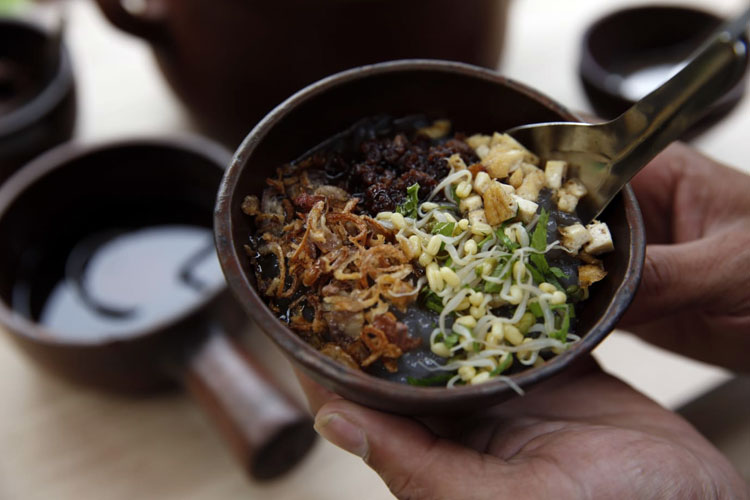
TIMES SINGAPORE, JAKARTA – On a misty morning in the Menoreh Hills of Kulon Progo, food stalls begin to open with the quiet rhythm of rural Java. Thenice scent of various food slowly fills the air. Among the familiar smells, there is one dish that never fails to surprise newcomers: Dawet Sambel.
At first glance it looks like an ordinary bowl of dawet, but one spoonful is enough to reveal its true character—sweet, spicy, savory, and unapologetically different.
A Bowl That Breaks the Rules
In most parts of Indonesia, dawet is a dessert. It is cold, sweet, and refreshing, made from green rice-flour jelly swimming in coconut milk and palm sugar syrup. Kulon Progo, however, tells a different story. Here, dawet becomes a savory dish, paired not with sweetness alone, but with sambal.
Dawet Sambel combines chewy dawet noodles—traditionally made from ganyong, a local tuber—with sambal kelapa, a spicy paste of roasted coconut and chilies.
Bean sprouts, tofu, and sometimes tempeh are added for texture and substance. A light palm sugar broth balances the heat, while fried shallots on top give a final crunch. The result is a dish that dances between opposites: cooling yet warming, sweet yet fiery.
Born from the Land and the Climate
The origins of Dawet Sambel are closely tied to Kulon Progo’s geography. Nestled near the Menoreh Hills, the area is cooler than Yogyakarta city.
Locals believe the addition of sambal was not just creative experimentation, but a practical response to the climate. The spicy kick warms the body, making the dish ideal for early mornings or cloudy afternoons.
Equally important is the use of ganyong. Once a staple crop in rural Java, ganyong reflects the community’s reliance on local, resilient ingredients. Long before modern flour was widely available, villagers turned what grew around them into nourishment—and eventually, identity.
More Than Food, a Living Heritage
For decades, Dawet Sambel has been prepared by hand in small markets and village stalls, passed down through families rather than written recipes. Elderly vendors remember learning the dish from their parents and grandparents, adjusting the level of heat by intuition, not measurement.
This quiet continuity earned Dawet Sambel national recognition when it was declared part of Indonesia’s Intangible Cultural Heritage. The title is more than ceremonial; it affirms that the dish is not just something to eat, but something to preserve.
A Taste Worth the Journey
Today, Dawet Sambel is not always easy to find. It appears in traditional markets on certain days and at cultural festivals celebrating Kulon Progo’s heritage. Those who seek it out are rewarded with more than a meal—they experience a story in a bowl.
For travelers accustomed to sweet dawet, Dawet Sambel may feel like a culinary paradox. Yet that is precisely its charm. It reminds us that tradition is not static. It evolves with place, climate, and creativity.
In Kulon Progo, dawet does not simply refresh. It challenges, warms, and tells the story of a community unafraid to let sweetness meet fire. (*)
Artikel ini sebelumnya sudah tayang di TIMES Indonesia dengan judul: When Sweet Meets Fire: Discovering Dawet Sambel of Kulon Progo
| Writer | : Khodijah Siti |
| Editor | : Khodijah Siti |
























 TIMES Singapore