
Blangkon in Makkah: Gunungkidul Pilgrims Bring Javanese Heritage to Hajj 2026
Gunungkidul pilgrims wear traditional blangkon during Hajj 2026 in Makkah, blending Javanese cultural heritage with spiritual devotion.
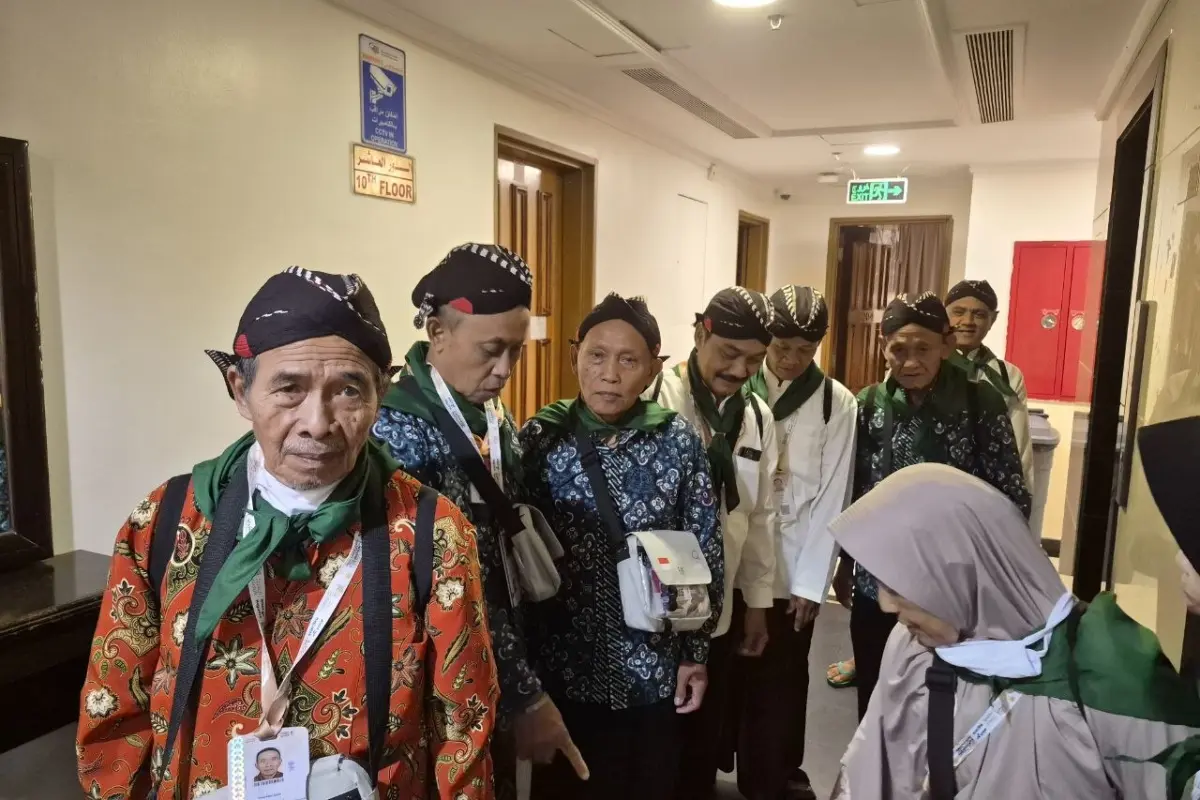
MAKKAH – The Hajj 2026 pilgrimage has once again highlighted the diversity of Indonesian culture, as a group of pilgrims from Gunungkidul, Yogyakarta, brought a unique local tradition to the holy city of Makkah. Instead of blending entirely into uniform attire, dozens of male pilgrims proudly wore blangkon—a traditional Javanese headgear—during their spiritual journey.
A total of 101 male pilgrims from the KBIHU Muslimat NU Darul Qur’an group chose to wear the blangkon as a distinctive identity throughout their pilgrimage. This initiative was not merely about appearance, but also about practicality and cultural pride. According to the group leader, the idea emerged from the need to easily recognize fellow pilgrims in the massive crowds of Makkah and Madinah.
We wanted something easily recognizable in large crowds, and we found it in the blangkon,” he explained (6/5/2026).
The Hajj is known for its immense scale, gathering millions of Muslims from around the world each year. In such dense crowds, losing track of one’s group is a common challenge. The use of a visually distinct item like the blangkon offers a simple yet effective solution, allowing pilgrims to stay connected with their companions more easily.

Beyond its practical function, the blangkon carries deep philosophical meaning rooted in Javanese culture. One of its symbolic features is the 17 folds, known as wiru, which represent the 17 units of daily Islamic prayers. This serves as a spiritual reminder for the wearer to remain consistent in performing the five daily prayers.
The headgear also proves functional during worship. Its design ensures that the forehead can directly touch the ground during prostration, fulfilling an essential requirement in Islamic prayer without obstruction.
For the pilgrims, wearing the blangkon is more than a logistical choice—it is a symbol of identity and pride. One participant expressed his feelings, saying that wearing the traditional headgear made him feel proud as an Indonesian representing a rich cultural heritage abroad.
Importantly, authorities have confirmed that wearing cultural attire like the blangkon is permissible during the pilgrimage, as long as it complies with religious guidelines. Pilgrims are only required to remove head coverings during specific rituals, such as when wearing the ihram.
The presence of blangkon in Makkah during Hajj 2026 is a powerful reminder that faith and culture can coexist harmoniously. While performing one of the most sacred acts in Islam, these pilgrims have shown that preserving local wisdom does not diminish devotion—instead, it enriches the spiritual journey with identity, unity, and meaning. (*)
Simak breaking news dan berita pilihan TIMES Indonesia langsung dari WhatsApp-mu! Klik 👉 Channel TIMES Indonesia. Pastikan WhatsApp kamu sudah terpasang.
Berita ini juga tayang di portal nasional
Baca versi lengkapnya di jaringan nasional kami.
