 Life Style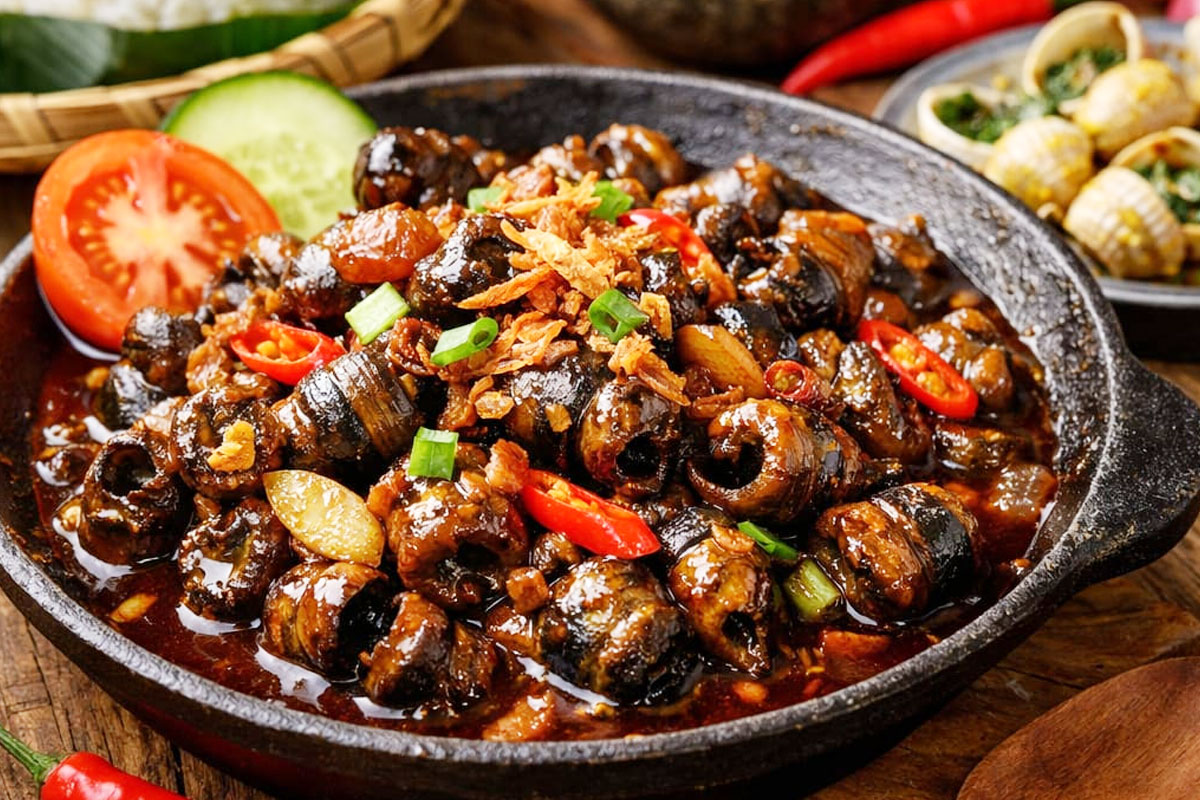
TIMES SINGAPORE, JAKARTA – Indonesia’s culinary world is built on courage—courage to experiment, to preserve tradition, and to elevate humble ingredients into memorable dishes. One striking example is Krengsengan Bekicot, a traditional snail-based dish from East Java.
While the word bekicot may raise eyebrows for some international readers, it is essentially Indonesia’s local counterpart of escargot, the snail delicacy widely known in French cuisine.
What makes krengsengan bekicot remarkable is not just the ingredient itself, but how Indonesian spices transform it into something entirely different. Delicious, spcy, sweet, and savory.
Bekicot and Escargot: Same Ingredient, Different Identity
Bekicot refers to giant land snails commonly found in rural areas of Indonesia. Internationally, snails are best recognized as escargot, often associated with fine dining, butter, garlic, and parsley. In contrast, Indonesian cuisine treats snails with assertive flavors.
Instead of butter-based sauces, bekicot is cooked with chilies, shallots, garlic, coriander, galangal, and sweet soy sauce. This contrast shows how the same ingredient can reflect vastly different culinary identities, shaped by local culture, climate, and taste preferences.
The local community in Indonesia commonly get the bekicot from local far or sometimes the do a night hunt in th elocal garden or field where the creature nested. "I used to look for some bekicot under the banana tree with my father and collect them in a baasket when I was just a child," Sari, a local community of Malang who used to live in rural area said.
The Krengsengan Cooking Method
Krengsengan is a traditional cooking technique that involves sautéing protein with spices until the sauce becomes dark, rich, and aromatic. Preparing bekicot requires careful handling.
The snails are cleaned thoroughly multiple times to remove slime and impurities, then boiled with herbs such as lemongrass and kaffir lime leaves to neutralize any earthy aroma.
Once tender, the meat is sliced and slowly cooked in a spice mixture until fully infused. This slow process ensures the snails absorb the bold flavors, resulting in a dish that is deeply savory with a hint of sweetness and heat.
Cultural Roots in East Java
Krengsengan bekicot has strong roots in rural East Java, where snails were once an accessible source of protein during difficult economic periods. Over time, the dish evolved from a necessity into a regional specialty.
Today, it is commonly sold at street food stalls and traditional markets, especially at night. For local communities, krengsengan bekicot represents resilience, resourcefulness, and culinary wisdom passed down through generations. It is not uncommon to hear locals describe it as comfort food that reminds them of village life and shared meals.
Taste, Texture, and Nutritional Value
Texturally, bekicot is tender yet chewy, often compared to escargot or slow-cooked beef tendon. Its mild natural flavor allows it to absorb spices exceptionally well.
Nutritionally, snails are high in protein, low in fat, and contain iron and essential minerals. Combined with Indonesian spices, krengsengan bekicot becomes a dish that is both flavorful and nourishing. For adventurous eaters, it offers a rewarding experience that challenges assumptions about what defines good food.
In many ways, krengsengan bekicot stands as Indonesia’s answer to escargot—less polished, more fiery, and unapologetically bold. It proves that great cuisine does not depend on luxury ingredients, but on tradition, technique, and cultural identity. (*)
Artikel ini sebelumnya sudah tayang di TIMES Indonesia dengan judul: From Krengsengan Bekicot to Escargot: Indonesia’s Spiciest Snail Dish
| Writer | : Khodijah Siti |
| Editor | : Khodijah Siti |























 TIMES Singapore