
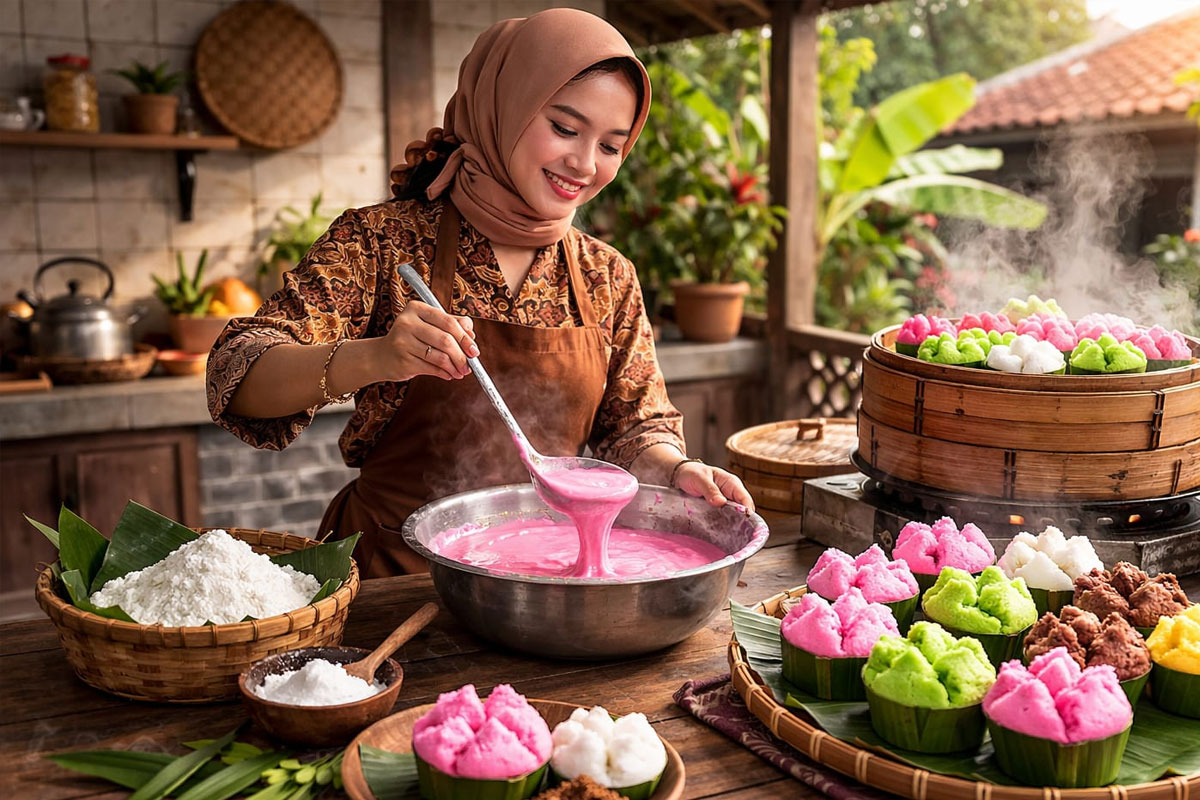
Kue Mangkok: A Blooming Indonesian Steamed Delicacy
Discover the charm of kue mangkok, Indonesia’s iconic steamed blossom cake. Learn its rich cultural history, traditional ingredients, and see how this colorful delicacy is lovingly prepared in a warm Indonesian kitchen.
JAKARTA – Brightly colored, soft, and blooming beautifully at the top, kue mangkok is one of Indonesia’s most recognizable traditional cakes. Often served at markets, family gatherings, and festive celebrations, this steamed delicacy is more than just a sweet treat — it carries a long history of cultural exchange and culinary adaptation.
The History Behind Kue Mangkok
Kue mangkok is believed to have been influenced by Chinese steamed cakes, particularly fa gao, which symbolizes prosperity and good fortune. The cake was brought to the Indonesian archipelago by Chinese immigrants centuries ago and gradually adapted to local tastes and ingredients.
In Indonesia, especially in regions like Jakarta, Semarang, and Surabaya, kue mangkok became popular in traditional markets. The name mangkok itself means bowl in Indonesian, referring to the small bowl-shaped molds used to steam the cake.
Over time, Indonesian cooks replaced wheat flour with rice flour and incorporated local ingredients such as palm sugar and fermented cassava (tape) to create a softer texture and slightly tangy flavor. The cake’s signature cracked top — resembling a blooming flower — is considered a sign of successful fermentation and proper steaming.
Today, kue mangkok is commonly served during celebrations such as Chinese New Year, weddings, and thanksgiving events. Its blooming shape symbolizes prosperity, growth, and happiness.
"This kue reminds me of my late granny, she's the best in making this traditional cake. This cake definitely brings back an old memory for me," Tika, a local community of Tulungagung said (17/2/2026).
How to Make Kue Mangkok
Ingredients
- 250 grams rice flour
- 200 grams sugar (white or palm sugar)
- 250 ml coconut milk
- 100 grams fermented cassava (tape singkong), mashed
- 1 teaspoon instant yeast
- Food coloring (optional)
- Banana leaves or paper cups for molds
Instructions
- Boil coconut milk and sugar together until dissolved. Let it cool to room temperature.
- In a large bowl, combine rice flour and mashed fermented cassava. Slowly pour in the cooled coconut milk mixture while stirring.
- Dissolve the yeast in a small amount of warm water, then mix it into the batter. Stir until smooth.
- Cover the batter with a clean cloth and let it rest for 2–3 hours until it becomes bubbly and slightly risen. This step is crucial to achieve the blooming effect.
- Divide the batter if using different food colors. Pour into molds lined with banana leaves or paper cups. Fill almost to the top.
- Preheat the steamer until it produces plenty of steam. Steam the cakes for 15–20 minutes on high heat. Do not open the lid during steaming.
- If done correctly, the tops will crack open like flowers.
A Symbol of Joy and Tradition
Kue mangkok represents Indonesia’s rich culinary heritage — a blend of Chinese influence and local creativity. Its simple ingredients and steaming method reflect traditional cooking techniques that have been passed down through generations.
Soft, slightly chewy, and fragrant with coconut, kue mangkok continues to delight people of all ages. Whether enjoyed with morning tea or served at festive gatherings, this humble steamed cake remains a sweet symbol of prosperity and togetherness. (*)
Simak breaking news dan berita pilihan TIMES Indonesia langsung dari WhatsApp-mu! Klik 👉 Channel TIMES Indonesia. Pastikan WhatsApp kamu sudah terpasang.
Berita ini juga tayang di portal nasional
Baca versi lengkapnya di jaringan nasional kami.
